

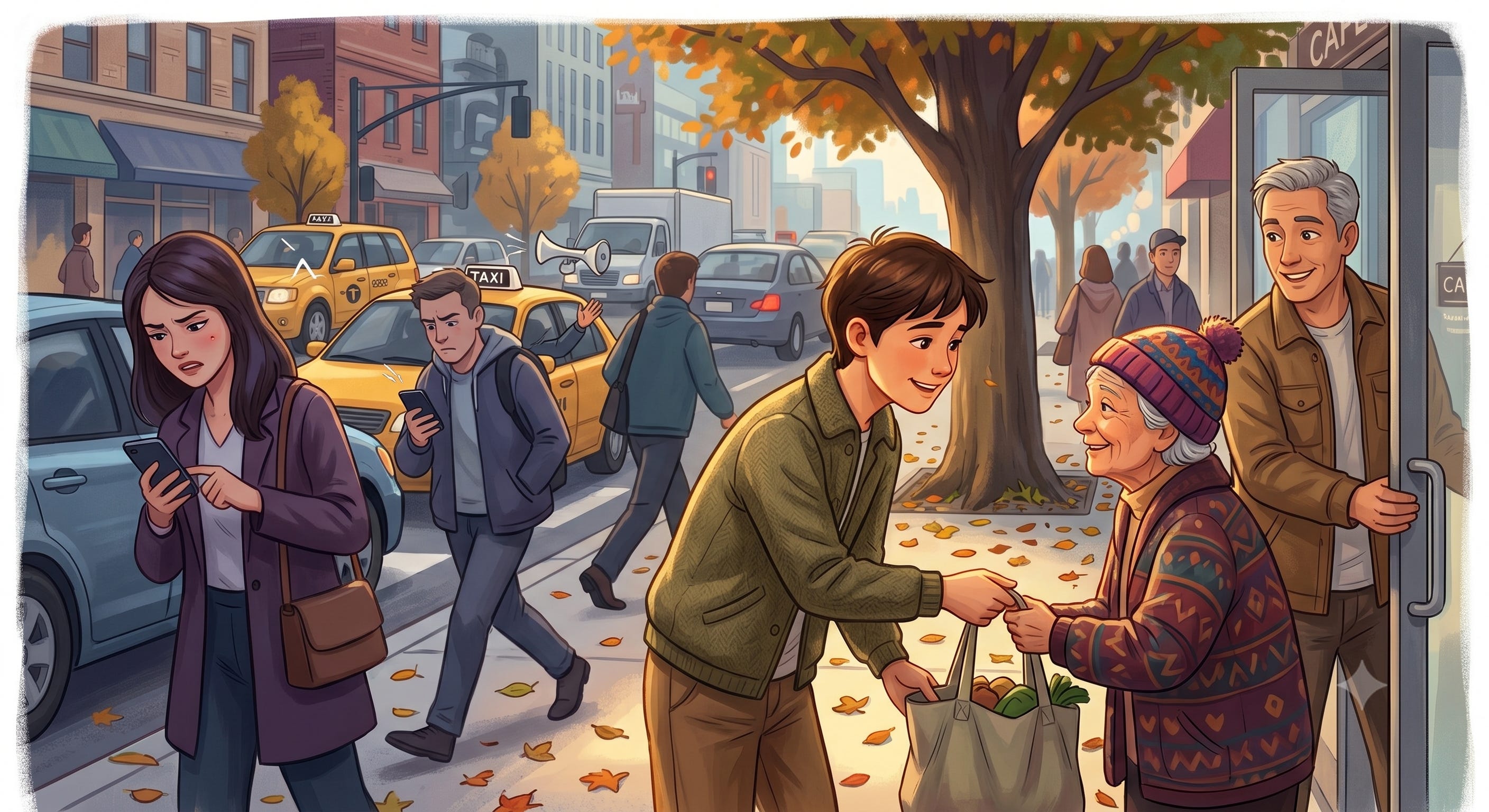
So, what is the state of kindness in our world today?
I’ve done a little research on this topic, and the results are fascinating—and a bit contradictory. Let’s dive into the state of compassion in 2025.
The Kindness Paradox: Why Do We All Think the World Is Less Kind?
We seem to be stuck in a strange contradiction.
A wave of recent surveys reveals a deep pessimism about the state of kindness in the world. Most of us feel that, as a society, we are ruder, meaner, and less compassionate than we were just a decade ago.
And yet, when asked about our own lives, a completely different picture emerges. We see ourselves as kind, and data shows small acts of kindness are happening all around us, all the time.
So, what’s really going on? Here’s what the latest research says.
The “Kindness Perception Gap”
The central conflict is this: **We think the problem is everyone else.**
A recent Siena Research Institute poll highlights this perfectly:
70% of people believe society is less kind than it was 10 years ago.
...But 97% of those same people described themselves as “a kind person.”
This gap is backed up by other studies. The 2025 Compassion Report from the Muhammad Ali Center found that 61% of Americans feel compassion has decreased in the last four years.
Where We See Unkindness
This negative perception isn’t coming from nowhere. When asked where they witness unkindness, people had very specific answers:
72% see it online and on social media.
69% see it in traffic or on public transportation.
55% see it in person during public interactions.
It seems our most visible, high-friction public spaces (both digital and physical) are shaping our entire perception of society.
The Good News: Kindness Is Actually... Everywhere
While our perception of kindness is low, the practice of kindness remains incredibly high.
It’s Frequent and Universal: A 2023 UCLA study on everyday social interactions found that people signal a need for help (like asking someone to pass a utensil) about once every two minutes. When those requests were made, people complied 7 times more often than they declined.
It’s Up Since the Pandemic: According to the 2025 World Happiness Report, global acts of benevolence (like donating, volunteering, and helping a stranger) are still 10% higher than they were before the pandemic.
Why This Matters (More Than You Think)
Kindness isn’t just a “nice to have.” The World Happiness Report found that believing in the kindness of others (specifically, trusting that a stranger would return your lost wallet) is a stronger predictor of a nation’s happiness than its GDP.
On an individual level, research shows that performing acts of kindness can measurably reduce symptoms of anxiety and depression and increase feelings of social connection. We consistently underestimate the positive impact our own kind acts have on others.
So, What Stops Us?
If we’re all kind people, and kindness feels good, why do we hesitate? “The Kindness Test,” a large-scale study by the University of Sussex, identified the top barriers:
1. Fear of Misinterpretation (66% worried it would be taken the wrong way)
2. Not Having Enough Time (58%)
3. Social Media (52% cited it as a barrier)
4. Fear of Being Seen as Weak (28%)
The Takeaway
The data suggests we aren’t suffering from a lack of kindness as much as a perception of it. We are surrounded by small, positive acts, but we are wired to notice the loud, negative ones—especially online and in traffic.
The world is likely far kinder than we give it credit for.
What do you think? Do you agree that kindness is declining, or do we just fail to notice the good? Let me know in the comments.